The real social media
Advertising never stopped working. We just forgot how it works.

The real social media
%20Thomason.avif)
There was a moment in the evolution of media I remember very clearly. Mainly because I was surprised that few people pointed out how silly it was. It was way back around 2009, but involved a few advertising principles still underappreciated today.
Firstly, some context:
Back then, marketers everywhere had, understandably, become very excited about targeted online advertising. Why talk to people that weren’t in the market for your products and services? What a waste!
It was a revolution.
It was also like a collective industry memory loss.
Wasn’t this a super-charged version of what we used to call direct marketing? You know, where we engage a carefully targeted audience for a short time with an appealing offer, and get a quick sales spike? We’d measure success through response, short-term sales impact and ROI. And yes, it could (and can) work very well.
Up to then we’d believed that brand-building through mass-media was generally much better for bigger, sustained sales growth. And that a combination of approaches, with the lion’s share going to the sustained stuff, was usually ideal.
We’d believed all that even though many of us didn’t fully understand why.
We’d believed all that even though, and here’s the important part, many of us didn’t fully understand why. It was just what we’d done for decades. It was what successful businesses and brands did.
When the internet brought easier, more affordable, more precise media options, we didn’t really stop to talk much about how advertising actually works. And how it might still work.
Like, why did we spend all that money talking to people that weren’t ready to buy, and might never be? We were almost embarrassed.
Marketer after marketer announced plans to move spend away from traditional media, where it would be far more efficiently targeted. It was obviously the smarter thing to do.
So, what was that moment back in 2009?
A widely circulated advertising article was describing the next, inevitable media break-through. It read something like…
We’ll soon be at the point where television viewers will be served only ads that are relevant to their individual needs and purchase habits. Up to now, only broad demographic ‘targeting’, with some consideration of programme context etc. has been possible. But soon, thanks to extensive data analytics, we’ll be far more precise.
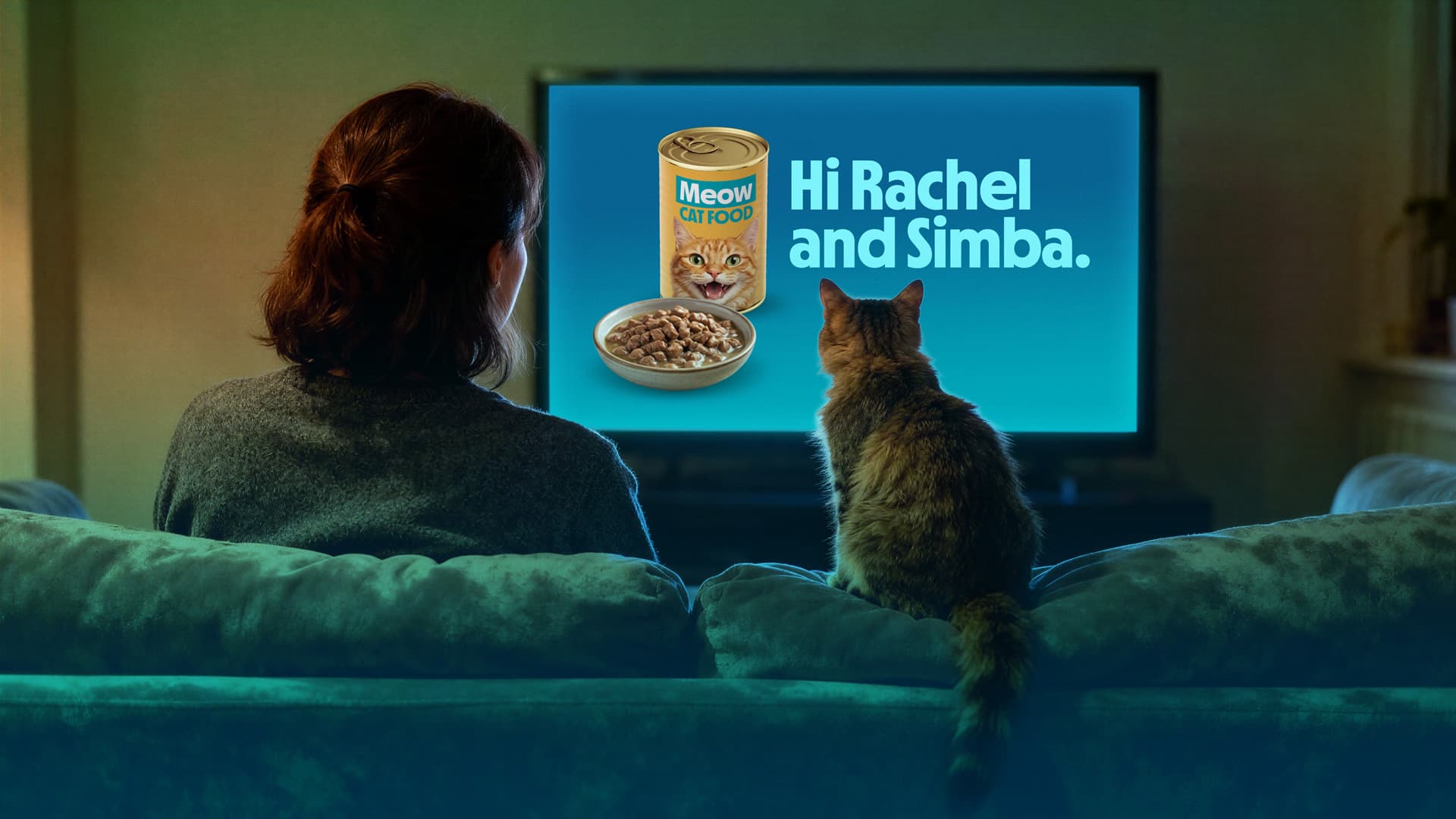
For example, a cat food marketer will be able to place their ad only on television screens in households that actually have a cat to feed…
I remember thinking it was ridiculous, and would reduce advertising effectiveness
The article went on to give other examples of where wasteful advertising spend would be eliminated. Naturally, many were excited about this.
I remember thinking it was ridiculous, and told anyone that would listen that this would reduce advertising effectiveness. I gave two reasons. Since then, the first reason has become more widely understood. The second really needs more attention.
1. Broad reach builds brands.
If such precise targeting could be achieved, you wouldn’t hear from Chef or Whiskas unless you had a cat. If you drank wine, you’d know nothing of beer brands. Kiwi pride associated with Toyota wouldn’t exist for you until you were ready to buy a new car. And, unless you were wealthy, you’d never see anything from BMW or Mercedes. (Much of this has happened to some degree, for other reasons.)
Strong brands talk to people that aren’t yet in the market. For some that could be months away. For others it might even be years.
Then one day they might get a cat. They might start drinking beer. Buy their first car. Or become wealthy. And it’ll be too late to start building a strong brand with them, because that might take anywhere between 6 months and 3 years.
Leave it until a customer first approaches your category, and you’ll be sitting alongside others competing for sales, without the massive headstart a strong brand enjoys. Start earlier and it might even be your advertising that draws them into the category.
The great thing is that once your brand is embedded in minds and memories, it can remain there even when your audience hasn’t heard from you for a while. Cats prefer Chef, miaow.
Mass-awareness beats targeted engagement
Of course, since that moment, many have rediscovered the value of broad reach, with a deeper understanding of why it’s important.
Byron Sharp’s ‘How Brands Grow’ used robust evidence to reshape views and bust myths. (Attracting new customers beats building loyalty, mass-awareness beats targeted engagement, memorable beats unique.)
Peter Field and Les Binet extended the case with work such as The Long and the Short of it. And here in NZ, James Hurman coined the wonderfully succinct ‘Future Demand’ to help us remember where the vast majority of advertising’s effectiveness really lies.
In the early years we conflated digital media with narrow targeting. Now we realise that it’s online advertising’s ability to help extend reach that matters most.
2. Shared viewing.
This point is yet to have its real time in the sun. Possibly because the argument is, so far, based more on psychology than numbers. But the effect is huge, and another reason why that ‘targeted TV ads’ idea seemed silly.
Humans are a social species. We build mutually beneficial relationships so we can succeed and survive. Instinctively, we really do have to care what others might think of us.
With every decision we make we’re automatically considering what others might think of our choice, and therefore us. Even when our choice might be invisible to most.
I’ll have what she’s having
At the more obvious end of the scale, e.g., cars, clothes and homes, the signal is clearly visible. Derek Thompson touches on this in his brilliant book about reach that’s not actually about advertising at all; Hit Makers. In a chapter called, The Audience of my Audience, he says, “People purchase and share all sorts of things because they want people to see that they have them”.
But the effect also applies, more subtly but very significantly, to less visible choices like energy provider, underwear or the beer we only drink at home. We imagine (largely subconsciously) what other people might think of us if they knew. “What sort of person am I if I choose this?”
As well as making choices that say something about who we are, we’re also influenced by what others do. (“I’ll have what she’s having.”) Instinctively, it’s all about safety. If others are making this choice and surviving, it’s probably okay. With purchase decisions it’s usually less dramatic. Popularity is more likely to be an endorsement of the quality of the product or service. But it’s also about a form of social survival… i.e. not looking silly.
This one’s variously called the Herding effect, or Social Proofing. None of that’s new. It’s long been known to be a powerful driver of decision-making.
But we don’t talk enough about how all this plays out in advertising media selection.
If people see ads that they believe large numbers of other New Zealanders are also seeing, they feel more positive about the brand featured. They’ll think the brand is well known. Famous even. That’s the equivalent of Herding, without actually having to see lots of other people using the product. It’s subtle, but that’s actually why it works so well.
Subconsciously, they feel their choice of product or service is approved. It’ll be seen as a reasonable decision.
There’ll also be a shared meaning attached to that brand. If they’ve chosen a brand because the advertising made it look like it was for people who value independence, or love exploring New Zealand, or have a great sense of humour, then they’ll know others will probably feel the same about their choice. And them.
Ironically this is almost the opposite of how ‘Social Media’ advertising works. The effect is far more likely to take place via broadcast media. And it’s most likely to happen on TV.
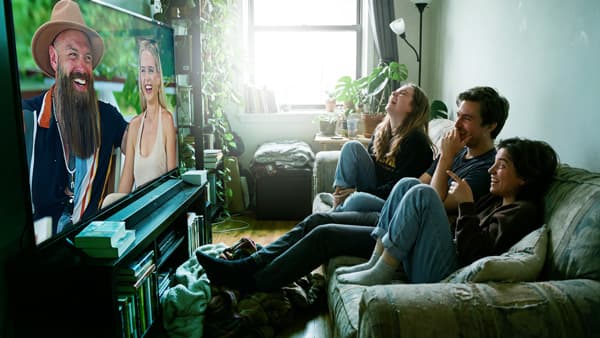
There’s an immediate and obvious effect if we’re sitting with friends or family watching the same TV ads. This boosts both reach and psychological impact. But it’s feeling that millions of other people around the country are seeing the same ad that makes the real difference.
Social media advertising was based on the opposite of shared viewing
Whilst it’s true that social networks clearly show the number of people who have seen, liked and commented on content you're watching, very little of that is advertising. We're rarely signalling to friends or strangers online that we have seen or liked a brand message.
In fact, social media's advertising pitch was based on the opposite of shared viewing. It was the promise that clever advertising would uniquely target each user.
So, compared to broadcast media, social media audiences are far less likely to feel others are seeing the same ads.
Putting advertising aside, most social media time is now spent scrolling content selected by algorithms and generated by strangers, rather than connecting with friends and family, or anyone. And it's worsening. Even Zuckerberg has lamented how few people now use Facebook for social connections.
Excessive scrolling is linked to anxiety, negative self-comparison, loneliness, and a general decline in mental health. It provides a dopamine hit, but doesn't fulfil a deeper need for connection. 'Social Media' is now a misnomer - possibly a dangerous one.
For both reasons, Social Media might be more accurately called 'Solo Media'."
What we once called ‘waste’, is very valuable.
After years of experimentation, the real power of traditional broad-reach media has become clearer. (Or remembered.) And, remarkably, it’s TV that still tops the brand-building list.
That’s because, among many reasons, it still reaches millions of receptive New Zealanders, repeatedly, every week. And because it includes people that might not have been considered ‘target audience’.
What some called ‘waste’, is actually something very valuable. It’s additional scale that drives future demand and shared brand meaning.
TV is the real social media.